
Learn about the sewer pipe in your inspection report
Find the material named in your report, see when it was commonly installed, and understand the basic characteristics inspectors use to identify it.
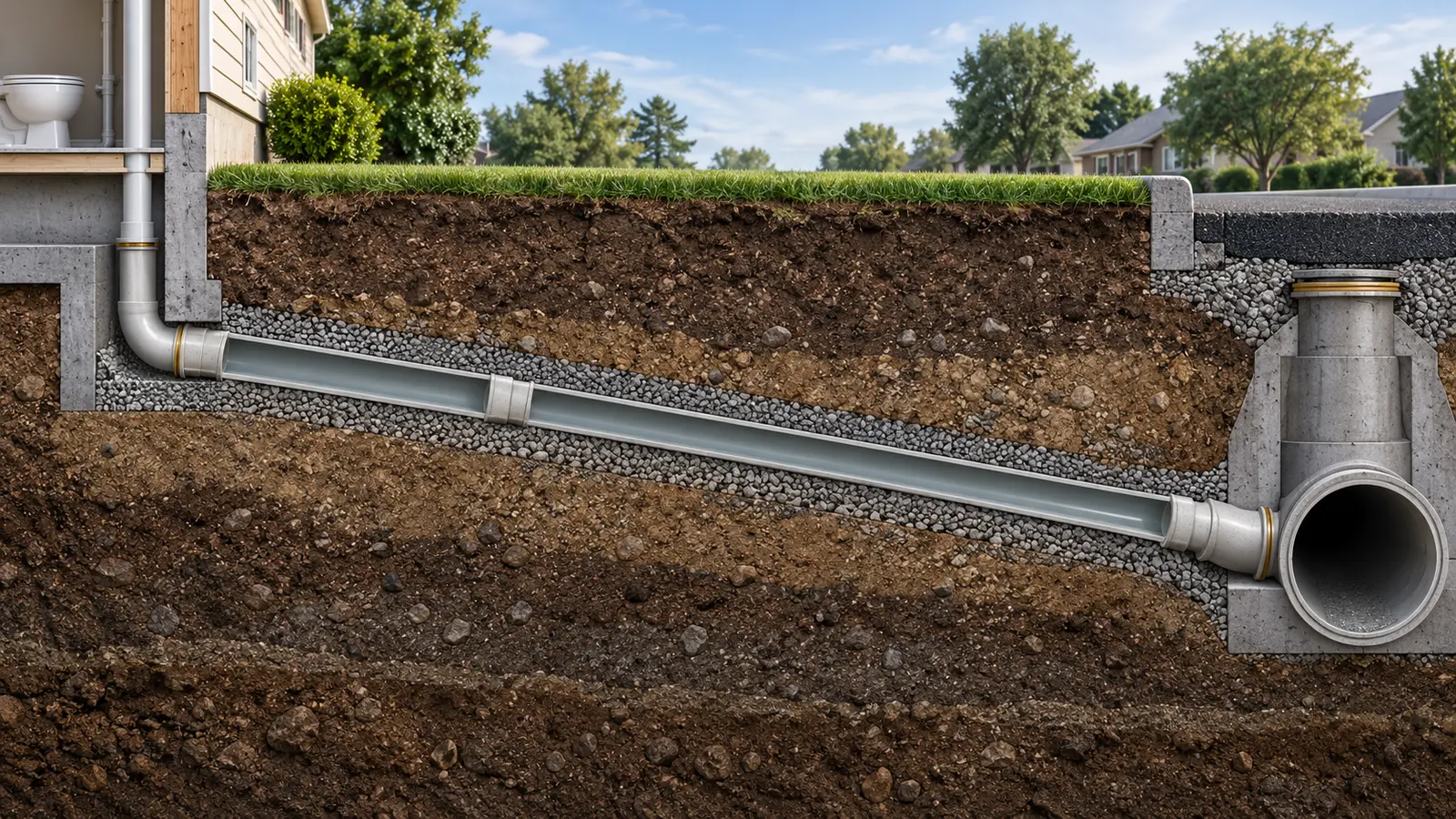
What a lateral sewer looks like underground
Step through common sewer-scope observations to see how the pipe and the illustration change.
Sewer pipe timeline
Broad North American history and residential-sewer use. Every bar follows the same proportional year scale.
How to read it: An arrow means the material or method remains available—not that it is equally common in every area. Local Idaho adoption varied, and a home’s construction year does not prove its sewer material.
Explore common pipe types
Select a material to see its appearance, installation era, joint pattern, and general lifespan.
How to use this with your inspection report
Your sewer-scope report identifies visible pipe materials and documents the conditions observed. This guide adds background—it does not change the report’s findings or recommendations.
Timeline dates are broad North American history and use ranges; local adoption varied. Each material card links to the source used for its history. Life expectancies are educational estimates and can vary with installation, soil, loading, wastewater, maintenance, and local practices. Educational illustrations are simplified examples, not substitutes for sewer-camera identification.